Showing posts with label LGBT. Show all posts

Thursday, February 24, 2011

Quote of the Day: Boehner on DOMA

House Speaker John Boehner (left) and Israeli Prime Minister Benjamin Netanyahu (Flickr/TalkMediaNews)

Via Ben Smith:
"While Americans want Washington to focus on creating jobs and cutting spending, the president will have to explain why he thinks now is the appropriate time to stir up a controversial issue that sharply divides the nation."

Statement from House Speaker John Boehner's office on Attorney General Eric Holder's announcement that the Obama administration will no longer enforce the Defense of Marriage Act.
Um, if that's not the pot calling the kettle black, I don't know what is.

Friday, February 4, 2011

Obama Flip-Flops on The Family at National Prayer Breakfast

Today I have a piece up over at Religion Dispatches on the National Prayer Breakfast since Obama seems to have forgotten it's run by the Fellowship Foundation, an organization with shadowy connections to anti-gay legislation in Uganda.
At last year’s National Prayer Breakfast, the President Obama used his platform to slam the event’s organizers, the Fellowship Foundation, or “The Family,” for its alleged involvement in lobbying for virulently anti-gay legislation in Uganda. “We may disagree about gay marriage,” said the president, “but surely we can agree that it is unconscionable to target gays and lesbians for who they are—whether it’s here in the United States or, as Hillary [Clinton] mentioned, more extremely in odious laws that are being proposed most recently in Uganda.”

At yesterday’s Breakfast, however, Obama’s speech was notable not for what he said, since he focused much on his personal faith journey, a theme of bipartisanship, and reiteration of his faith as a Christian. Instead, the speech was interesting for what he didn’t say. Some pro-LGBT activists were surprised to see that he attended the breakfast again at all after the previous year’s criticism of the organizers; but not only did Obama attend this year’s event but he made no mention of the ongoing controversies surrounding the event’s organizers whose involvement in Uganda has once again entered headlines after the killing of Ugandan LGBT activist David Kato.

The assailant admitted to killing Kato with a hammer after he agreed to accept money in exchange for sex. Uganda has been debating a piece of legislation that, if passed, would increase the severity of the punishment for homosexuality to death or life imprisonment, which some say has been introduced by at least one member of the Fellowship.

Read more ...

Tuesday, January 25, 2011

'The Kids Are All Right' and Missed Opportunities

(Focus Features)

It seems the Oscar nominations are out today. I've seen seven of the 10 nominees thus far, including The Kids Are All Right, which I had a chance to finally watch last night. (No spoilers except what you've seen in the trailer.)

I was ultimately disappointed by this film, which is I suppose what happens when you see a film that's been hyped for as Oscar-bait so long after it's been out. My main complaint with the film was that all of the characters felt like flat stereotypes to me -- except for Mark Ruffalo's character, Paul. Paul was, in many ways, the character with the most depth, whereas both Julianne Moore and Annette Bening's characters came of mostly as stereotypes of a lesbians (the exchange about the Joni Mitchell record is what did it for me). Bening's character comes off as a villain for much of the film, and Moore's character, while at first we feel sorry for her, she does ultimately betray her entire family.

But even though Ruffalo has the most interesting role to play, the film offers little in the way of resolution for his character. Instead, his character feels like a red herring, and we're actually supposed to focus on the family portrayed, which would work, expect there's been little in the way of realistic character development with any of them.

Ultimately, this film to me felt like a missed opportunity. It's not uncommon for couples -- especially lesbian couples, since women's sexuality sometimes fluctuates over time (keep in mind I'm not saying this is true of all women) -- to begin to want and need different things sexually over the course of the relationship. After all, sexuality is complex and long-term relationships go through changes over time. The combination of those two things in the film's setup should have made for a fascinating means for delving into those ideas. But the way Moore's character went about that exploration, through betrayal rather than an open discussion with her partner, instead makes the show more like a traditional story about a family that goes through an affair.

The movie didn't quite do it for me. But it's still great to see a film about an LGBT family nominated for an Oscar.

Tuesday, November 9, 2010

On the 'It Gets Better' Campaign -- And Reactions to It

Ann Friedman and Gabriel Arana over at The American Prospect are taking issue with the direction that the "It Gets Better" campaign has taken. Arana takes issue with the idea that straight "B-list" celebrities like Kim Kardashian and Ezra Klein are making "It Gets Better" videos that seem to miss the whole point of the campaign: Talking about the problem with bullying that targets LGBT youth. [Disclosure: I consider Klein a friend.] Arana's point is really important, and one that I've been thinking about a lot over the course of this campaign. Particularly this part:

It's not just the schoolyard jerk who picks on you. It's the pastor who rails against the "gay agenda" on Sunday, the parent who stands up at a city council meeting and says he moved to your city because it's "the kind of place that would never accept the GLBT community with open arms," and politicians like New York's would-be governor Carl Paladino, who on the campaign trail said things like "there is nothing to be proud of in being a dysfunctional homosexual." Even once you get past high school, you still can't get married or serve in the military, and in most states, your employer can fire you just for being gay. This is the kind of "bullying" gay kids face, and it's the kind no one's standing up to.

If anything, the responses of educators and policy-makers seem designed to illustrate that, for gay teens, it often doesn't get better.

After all, just last month the New York Daily News reported that a gay cop in the 103rd Precinct in Queens faced "relentless anti-homosexual hostility on the job." And we still have no federal employment protections in place for LGBT folks.

That was my main problem with the "It Gets Better" campaign at the outset. After all Dan Savage certainly faced bullying in the past, but he's also reasonably wealthy and lives in a gay-friendly city. (I listen to Savage's podcast regularly.) Not everyone can have his fairy-tale life (or at least, the fairy tale he presented in his video). His video, like those of Kardashian's and Klein's, ring somewhat hallow to the ears of those that struggle with discrimination, not just on the LGBT front, but also when it comes to other components of identity. Savage comes from privilege as a white, wealthy gay man living in Seattle. Savage's outlook seems to be that homophobic elements of culture will never change, or at least, that we shouldn't bother with trying to change it, thus, the fairy tale escapism story. Incidentally Savage's advice continues to be to tell gay youth in rural gay-unfriendly areas to get out and run to a city that's more accepting of gay rights. Not much of an advocate for changing the culture there.

But there are a couple of things missing from the discussion. First of all, one point that needs to be addressed if we're talking about gay, lesbian, bisexual, transgender, and queer teen suicides, we also need to talk about mental illness. That's harder to parse because causes of mental illness are complex and mostly unknown. That's not to excuse bullying in these instances at all -- but it is important to acknowledge that what's going on here when it comes to suicide is complicated and can't be blamed totally on bullying. After all, not all LGBTQ people commit or attempt suicide and not all suicides are committed or attempted by LGBTQ folks. Unfortunately, the issue is more complicated than just blaming bullying -- though curbing bullying can certainly help.

Secondly, I understand how hollow the words of straight people who go off topic of the problem of LGBT bullying and make it about their own problems with not fitting in sound. But if we're going to critique straight people when they weigh in on the subject (I also identify as straight), then we need to give guidance to how they can help. The very reason I haven't written about this campaign up to this point is that I felt I wasn't "qualified" because my experience as a straight person didn't fit in with the narrative of the campaign. But where do straight people fit in? That has never been a clear part of the discussion.

To me, this echoes other discussions that minority groups get into about outside allies trying to get into the game: With feminists, they sometimes argue men (particularly straight men) aren't qualified to weigh in on the subject of discrimination or sexism because they've never experienced it. I tend to fall on the side of involving men in feminism -- even at the risk of them saying something that isn't quite right -- is worth it because I don't see how we change some of these institutional problems without men.

But the discussion around LGBTQ bullying is really hard to talk about as a straight person because I feel that there's little I can do in my daily life, except show support to the LGBTQ people in my life and vote for candidates who promise to support LGBTQ policies (even if they don't follow through on it). Friedman reflected this disappointment when said:

Obama's "It Gets Better" video, on the other hand, is primarily an anti-bullying public service announcement -- about as politically risky as decrying people who kick puppies or steal old ladies' handbags. In a message directed toward kids who feel constantly threatened, Obama chooses the safe path. He tells gay teens to stay strong and that "there is a whole world waiting for you, filled with possibilities" -- which is true, unless they aspire to marriage, parenthood, or a career in military service. Indeed, within days of posting the president's "It Gets Better" video, the Obama administration announced it would be reinstating "don't ask, don't tell" after a recent court ruling that ordered the military to stop enforcing the policy. Obama may want things to get better for LGBT teens, but he is not working to ensure that they do.

I can understand why Obama's response was frustrating to many in the LGBTQ community, precisely because of the administration's stalling on important and politically popular actions like repealing "don't ask, don't tell," pushing for more employment protections for LGBTQ folks, or showing support for same-sex marriage.

Arana echoes that sentiment in his disappointment with the Department of Education, which responded to the "It Gets Better" campaign with a memo clarifying that discrimination against LGBTQ students should be included with the types of discrimination that are banned by federal law -- even as they acknowledged that there are no laws in place that back up their stance. Arana thinks the Department of Education and Secretary of Education Arnie Duncan didn't go far enough in talking about LGBTQ youth and the problems they face.

There's certainly enough blame to go around. And both Friedman and Arana make the point that what is actually needed instead of a video campaign -- as well intentioned as it is -- is to change some of the institutional problems that lead to the othering of LGBTQ folks in the first place. That I can't disagree with, whether I'm qualified to comment on the subject or not.

Wednesday, October 20, 2010

Facebook, Twitter ‘Spirit Day’ Raises Awareness About LGBTQ Bullying

Today has been designated as Spirit Day, designed to bring attention to bullying of LGBTQ youth. It was an idea started by Canadian teenager Brittany McMillan, who was saddened by the recent suicides of LGBTQ teens, wanted to do something. On Oct. 2, she announced her plan on her Tumblr:

It’s been decided. On October 20th,

2010, we will wear purple in memory of the recent gay suicides. Many of them suffered from homophobic abuse in their schools or in their homes. We want to take a stand to say that we will not tolerate this. Purple represents Spirit on the LGBTQ flag and that’s exactly what we’d like all of you to have with you: spirit. Please know that times will get better and that you will meet people who will love you and respect you for who you are, no matter your sexua

lity. Please wear purple on October 20th to remember all the lives of LGBTQ youth that have been lost due to homophobia. Tell your friends, family, co-workers, neighbors and schools.

NOW GO TUMBLR BLOGGERS, REBLOG LIKE CRAZY! WE WANT EVERYONE IN ON THIS!

Her message was effective, and folks from

all around the world are getting on board with Brittany's message. Spirit Day was officially endorsed by the Gay & Lesbian Alliance Against Defamation (GLAAD) and really took off on Facebook and Twitter. Even Perez Hilton got into the act, following up on his promise to play "nice." Here's a sampling of some of the #spiritday posts on Facebook and Twitter:

Thursday, May 6, 2010

The NFL Team Asks Draftee 'Gay or Straight?'

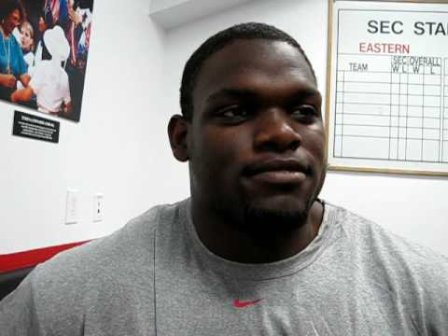
Geno Atkins Geno Atkins was asked during the NFL draft if he were straight or gay.

Via Outsports, the new defensive tackle for the Cincinnati Bengals, Geno Atkins, told reporters that the only "unusual" question he was asked during the draft was whether he was straight or gay. Atkins didn't disclose his answer, but it's a bit odd that the Bengals would even ask the question in the first place.

Outsports surmises that this questions was probably just a one-time thing and not standard procedure for the NFL, but the fact that the Bengals even thought to ask is indicative of how difficult for the NFL to accept non-straight players.

In fact, in a 2004 book by then-New York Times writer Mike Freeman, he interviews anonymously a closeted NFL player that goes by the pseudonym Steven Thompson. In an update last year, Freeman noted that homophobia, particularly in the African-American community, is still rampant in professional sports like the NFL.

The parallels between the military and the NFL seem obvious. Both are hyper-masculine institutions that often mistake sexual orientation with the ability to effectively master a physical job. It may be a long time before we see an openly gay NFL player, but I hope it's sooner than I think.

UPDATE: Thanks to commenters for pointing out that the Bengals couldn't have been the ones that asked the question because they didn't meet with him before drafting him. According to this NFL story, Atkins says he "couldn't recall which one."

Cross-posted.

Tuesday, April 6, 2010

Parents of Constance McMillian's Peers Prove They Haven't Matured Since High School

4363051960_9ed33fe788(Flickr/prenetic)

Constance McMillen, the Mississippi teen who was barred from taking her girlfriend to prom and then had a judge rule that the school board had violated her rights, was duped by her peers into going to a "fake prom" that only five other students attended, according to reporting by The Advocate. Her peers, meanwhile, went to another prom organized by parents at an "undisclosed location."

The level of immaturity demonstrated by not only McMillen's peers but also her parents is the kind of thing I might expect to see on season one of Gossip Girl, but certainly never thought parents of the Mississippi teens would think that such social outcasting is acceptable behavior. Perhaps parents thought they were taking a principled stand against homosexuality, but instead, they ended up demonstrating how immature they were. Grow up, parents.

Cross posted.

Tuesday, November 17, 2009

Postponing the ENDA Vote

The House Education and Labor Committee was supposed to hold a markup hearing and vote on the Employment Non-Discrimination Act, a piece of legislation that would ban employers from firing individuals due to their sexual orientation or gender identity. However, the committee sent out an email late in the day yesterday saying that the vote has been postponed, "rescheduled TBA."

Although the legalization of same-sex marriage has taken the forefront of the debate in LGBT issues, many feel this legislation is a key component of civil rights. While marriage often gets mucked up with religious debates, ENDA is often seen as a reasonable advancement for civil rights that has to do with workplace security. The ACLU reports that it is legal to fire or refuse to hire someone because of their sexual orientation currently in 29 states. It is also legal to practice job discrimination against someone due to gender identity in 38 states.

ENDA would actually make a difference for those LGBT individuals that feel they have been treated unfairly in the workplace. It's unclear when the House committee will reschedule the vote, but let's hope it's soon.

Cross posted.

Monday, October 19, 2009

Morehouse Bans 'Women's Garb' in Public

dress-code

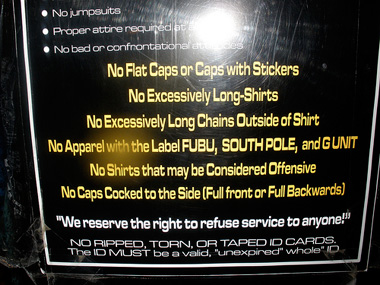
Inside Higher Ed reports that Morehose has gotten serious about its status as an "elite" historically black college. (Full disclosure: Campus Progress once held a regional conference on Morehouse's campus.) They have adopted a dress code that encourages its students to be "well read, well spoken, well traveled, well dressed and well balanced." As a single-sex instiution that has an all-female counterpart, Spellman, Morehouse created a policy so their men will be "well dressed":

  • Caps, do-rags and hoods are banned in classrooms, the cafeteria and other indoor venues. Do-rags may not be worn outside of the residence halls.
  • Sunglasses may not be worn in class or at formal programs.
  • Jeans may not be worn at major programs such as convocation, commencement or Founder's Day.
  • Clothing with "derogatory, offensive and/or lewd messages either in words or pictures" may not be worn.
  • "Sagging," defined as "the wearing of one’s pants or shorts low enough to reveal undergarments or secondary layers of clothing," is banned.
  • Pajamas are banned in public areas.
  • Wearing of "clothing associated with women’s garb (for example, dresses, tunics, purses, handbags, pumps, wigs, make-up, etc.)" is banned.

Understandably, LGBT students are protesting the policy. The administration claims this policy isn't about its LGBT students and is instead focused on "all students," saying that Morehouse is supportive of its LGBT students. But Morehouse's site doesn't list LGBT as groups that students can get involved with on campus, instead favoring "Greek life" and "athletics."

The policy sets a standard of what "well dressed" means without taking into account students that may not identfy with this particular type of dress. Even students that don't identify as falling outside of gender norms may have problems with the school's effort to restrict other clothing items that are popular at other HBCUs.

(The photo above was one I took at a bar in Grand Forks, N.D. that banned certain types of clothing, supposedly to prevent "gang members" from entering the establishment.)

Cross posted.

Recognizing Gay Marriage, If Not Allowing It in California

6fc3

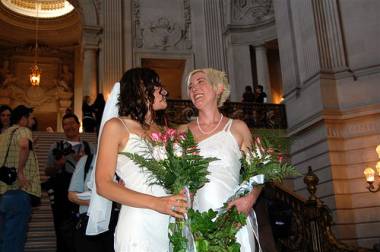
Yesterday Gov. Arnold Schwarzenegger (R) signed a bill in California that would recognize same-sex marriages from other states. Other states, including the non-state District of Columbia, have begun recognizing same-sex marriages in other states. For many states, it becomes a way of supporting LGBT marriage rights if it's not politically possible to pass same-sex marriage in their own state. This is certainly good news for LGBT rights in California.

Cross posted.

Friday, September 4, 2009

Is Matthew All There Is?

Thanks to the publication of The Meaning of Matthew, Judy Shepard's new book on her son's life, the hate crimes legislation resulting from the horrible scene of Matthew Shepard's death is back in the news. But as his mother's book discloses, Matthew Shepard wasn't an angelic figure in life even though he has turned into martyr in death.

Gabriel Arana's piece on this subject is something I find a little problematic. He seems to blame Judy Shepard because she "ultimately falls back on eulogistic platitudes." But I find that criticism distasteful. Judy Shepard has gone through something I dearly hope no parent ever has to go through -- not only the death of a child, but the homicide of her child. If anything, I admire her strength to be critical of her son's memory at all.

The other point I find problematic is here:
The Matthew Shepard Act is currently under consideration in the House after being stymied under George W. Bush, who threatened to veto it. If it passes, gay-rights groups can declare a victory. But what will have been vanquished? Even his mother acknowledges that "a dyed-in-the-wool and determined bigot isn't about to log onto the Internet to check state or federal statutes before bashing someone's head in."

What hate-crime laws do provide are stricter sentencing guidelines, feeding a criminal-justice system that has imprisoned more than 1 percent of the U.S. population and unfairly targets minorities. The courts imprison blacks at six times the rate of whites, and Hispanics, at more than double the rate of whites; the rate of black incarceration under President George W. Bush was higher than it was in South Africa during apartheid. If the face of anti-gay violence were a racial or ethnic minority, would we still be pushing for hate-crimes legislation that props up the criminal-justice system?

As Jos Truitt at Feministing.com points out, activists' energy would be better spent on empowering victims and combating the homophobia that motivates hate crimes. Groups like the Human Rights Campaign, which are spearheading the effort to get the Matthew Shepard Act passed, should focus instead on education programs and passing the Employment Non-Discrimination Act. Harsher murder sentences can't bring back the dead, but nondiscrimination laws and education programs can help LGBT Americans who are still living. It's hard to see how Shepard's memory is "honored" by a legalistic redefinition of federal sentencing guidelines or how this accomplishes anything concrete for gay rights.

I understand the general idea that it's unlikely hate crimes legislation would be enforced in any kind of systematic way if passed, but I do think that by passing such legislation, Congress is making a statement that killing someone because they are gay, lesbian, queer, or transgender is unacceptable. Furthermore, Arana seems to suggest that when it comes to LGBT rights, we must choose one thing and work on that. There's plenty of political advocacy to go around. Sure, some legislation my make a greater impact than others, but when it comes to figting for LGBT rights, it seems insulting that we're asking activists to choose one thing for which they can fight.

Arana's other -- and perhaps bigger -- point is one to which I'm more sympathetic:
Over 1,400 members of the LGBT community are victims of a hate crime every year, which includes violent attacks as well as harassment. Why, then, is Shepard the "face" of gay rights? The implication is that all the other candidates weren't quite right: not urban New Yorkers dying of AIDS in the 1980s, not inner-city black adolescents whose parents kicked them out of the house, not leather daddies marching on Washington. The pictures of other gays, lesbians, and transgender people did not prove sufficiently salable to make it onto rally placards.
By making Matthew Shepard, a young white man who otherwise comes from a place of a certain kind of privelidge, we sometimes imply that others who suffer from violence and harrassment somehow don't count. I understand that by elevating Matthew Shepard's story we can be ignoring the stories of others. Still, many people understand why violence against LGBT people is problematic because of Matthew Shepard. It's something they might not otherwise think about. I don't think that's bad -- but we should use Shepard's story to tell the stories of others.

Cross posted.

Monday, July 13, 2009

Brüno's Attempt to Shock

I went to see Brüno this weekend, helping it make $30.4 million on opening weekend. It was precisely what I expected. The movie is made up of attempt after attempt to squeeze uncomfortable laughter out of the audience. Maybe I read too much about it before I went to see it or maybe it was the day I was having, but I just wasn't into it. I found it predictable in its attempts at shock value.

I also found its attempts to expose homophobia a little too obvious. It's not surprising or shocking that those who try to "convert" gays through Jesus or fans of ultimate fighting might not be the most open-minded when confronted with the über-stereotype of gay culture. It seems like the choices of places to expose were rather low-hanging fruit. There are far more interesting and subtle forms of homophobia in today's culture, especially among those that theoretically support gay rights and want to be sure they don't come across as bigoted. That seems a far more interesting nut to crack (ok, I admit, pun intended).

Verdict: Less funny than Borat, but good for a laugh if you've got nothing better to do.

Thursday, May 7, 2009

Conservatives and a Gay Justice

I sort of disagree with Richard Just's take on the right's reaction to a potential lesbian nominee. While all of the things he says about the right's arguments about gays are true:
As the gay rights battle has come to center more and more on the specific question of marriage, conservatives have frequently insisted that they are not anti-gay, just opposed to gays getting married. Conservatives are attached to this distinction because they know that, without it, they end up looking like bigots. But if they decide to make an issue of a Supreme Court nominee's sexual orientation, they would effectively be conceding that this distinction was a lie.
I'm not sure the right will see it that way. It seems pretty clear that the opposition to Obama's nominee is building already, even though Obama probably doesn't even have an official short list. They will not only pile on all the old arguments about "activist judges" and the like, but they will likely adopt Just's line of reasoning:
Of course, conservatives could try to have it both ways, and argue that they oppose a gay nominee because of gay marriage--that is, because it would bias the justice's vote should gay marriage ever come before the court.
To conservatives, they're willing to fight acceptance of gays in public life any way they can. They definitely don't want someone who is pro-gay like Elena Kagen and the same argument will be applied to Pam Karlan and Kathleen Sullivan, both of whom are openly gay. To them, those that are gay and those that advocate for gay rights are the same. They won't think anything of opposing a gay nominiee, much as they won't think anything of opposing a straight nominee that would be sympathetic to gay rights.

It's certainly nice to think that anti-gay conservatives have founded their arguments against gay marriage on logic and sound reasoning, but I think that might be giving them too much credit.

Wednesday, April 8, 2009

New Anti-Gay Marriage Ad


The really weird thing about this full-of-lies video that the National Organization for Marriage ad does is it tries to paint gay marriage as somehow having anything to do with the people other than those who are getting married. It's trying to say that it makes victims out of straight Americans. Gee, I bet GLBT people can't relate relate at all to the whole persecution thing.

What's great, though is that the Human Rights Campaign took the video and put it on their YouTube page. That way, the label is "Lies from the 'National Organization for Marriage.'" Very savvy. I hope HRC puts together a response ad that actually points out who the victim is in these debates over marriage -- the people who are told their parterships are immoral and wrong.

Monday, November 10, 2008

Religion and Same-Sex Marriage

I largely agree with Emily’s post about same-sex marriage. As frustrated as GLBT activists might be, there are two important things to think about: First, attitudes about same-sex marriage are changing with younger generations. As those generations grow older and take more control, there is a great deal of hope that they will simply overturn the parochial notion of defining marriage as “one man and one woman.”

Second, it’s a good time for the LGBT community to take a long, hard look at its own movement. It needs to adopt some new, more inclusive and grassroots strategies. It’s a problem that the feminist movement continues to struggle with, so I’m not surprised that the LGBT has some problems with it as well. What will hopefully emerge is a better, stronger, more diverse movement.

But one thing I’d like to note is that Emily calls the institution of marriage a largely religious one, and one that the LGBT community shouldn’t bother to mess with. (Note: See my earlier post on how marriage historically hasn’t been much of a religious institution so much as means of making contracts and alliances between clans.) It’s understandable that many in the LGBT community have rejected religion in whole or in part, since many religions have more or less demonized gay people. But there are plenty of people out there that identify as both religious and gay or queer. Some religions have recognized same-sex marriage as a moral choice, and welcome those who choose to commit to one another openly in their parishes.

Furthermore, by rejecting all religion because some of it doesn’t accept same-sex marriage, LGBT communities risk alienating those who could be some of their strongest allies. Rejecting marriage because it has religious overtones lets those with the most conservative versions of the institution define it. Marriage is simply the legal joining of two individuals. Some people also attach a religious definition to it, but many others don’t. So long as we let the conservatives on the Family Research Council define it, the LGBT movement will have trouble growing.

Cross posted at Pushback.

Tuesday, July 29, 2008

Black (not gay) in America

So I haven't seen CNN's Black in America. I probably won't watch it because it'll just end up making me angry. This always happens when a mainstream group sets out to create the definitive piece on a large group of people that isn't monolithic. One of the best criticisms of the the series was on The Bilerico Project today. The writer, H. Alexander Robinson, points out that they experience presented by the series came from a largely straight perspective:
In almost every segment there was an opportunity to bring Black gay men, lesbian women, bisexuals and transgender men and women into the discussion.

Yet there was nothing, not even a suggestion that we exist.

He also starts with a great W.E.B. Du Bois quote, "How does it feel to be a problem? I answer seldom a word. And yet, being a problem is a strange experience,--peculiar even for one who has never been anything else." It's hard to include all perspectives when you set out on such a project like Black in America, but it seems that there was little thought into anything other than a very specific perspective.

Related Posts Plugin for WordPress, Blogger...